In late 2025, the Cyberjustice Laboratory participated in four important academic and professional gatherings focused on legal Artificial Intelligence (AI), agentic systems, virtual and augmented reality, and access to justice. Across these venues, the Lab shared ongoing work on Large Language Models (LLMs)-assisted online dispute resolution (ODR) and introduced new research on LLM-based web agents for legal self-help and public-facing justice services.
1. 2025 International Conference on Computational Law (计算法学国际会议) — Shanghai
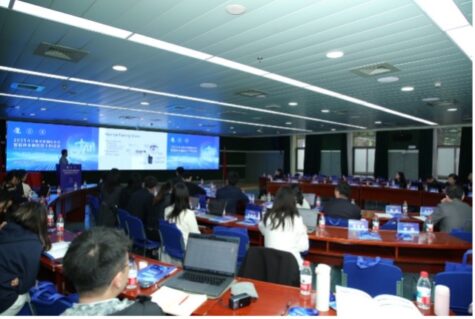
The Lab took part in the 2025 International Conference on Computational Law, held in Shanghai, themed “Rule of Law under the Comprehensive Application of Intelligent Agents” (智能体全面应用下的法治), with discussions spanning governance, applications, and evaluation of legal AI agents.
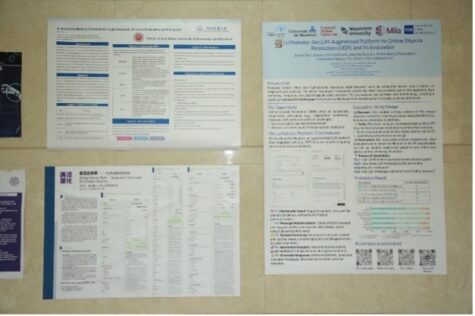
During the poster session, Jinzhe Tan presented LLMediator, an experimental AI-assisted ODR platform that explores how large language models can support negotiation/mediation workflows, such as reformulating inflammatory messages and drafting mediator-style responses.
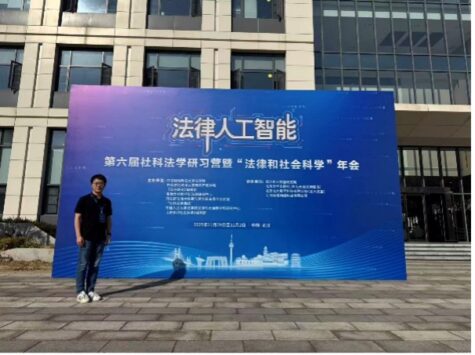
2. Social Science Law Research Camp & “Law and Social Science” Annual Meeting (社科法学研习营暨年会) — Wuhan
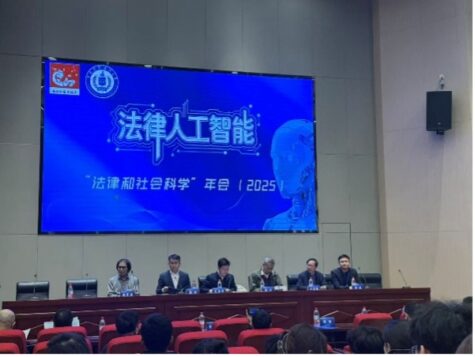
We also joined the 6th Social Science Law Research Camp, hosted at Zhongnan University of Economics and Law from November 28 to December 2, 2025, under the theme “Legal Artificial Intelligence” (法律人工智能). The program was held alongside the “Law and Social Science” Annual Meeting (2025).
This event offered a valuable space to exchange perspectives across disciplines, linking legal practice needs with AI methods and helping sharpen research questions around responsible design and evaluation of legal AI tools.
3. 3rd Cyberjustice Europe Conference — Strasbourg, Palais de l’Europe
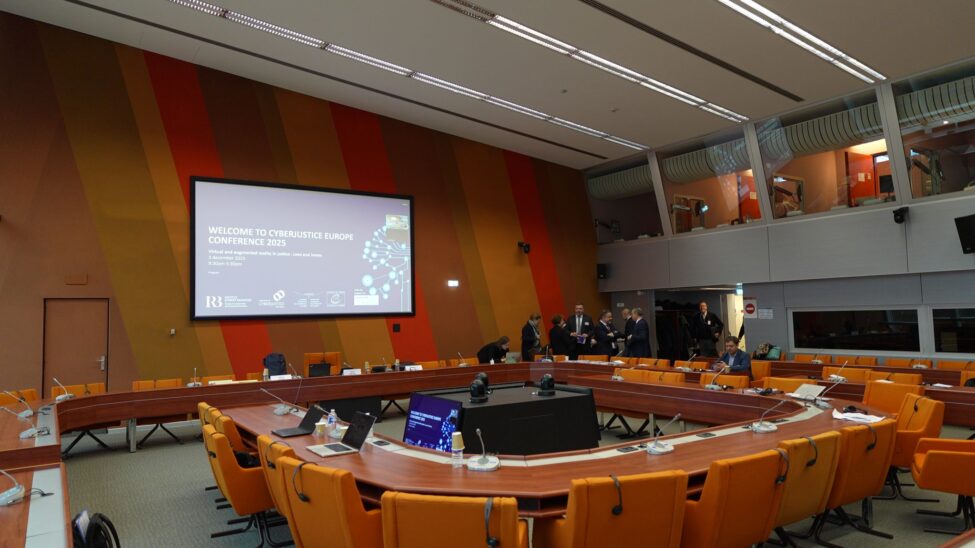
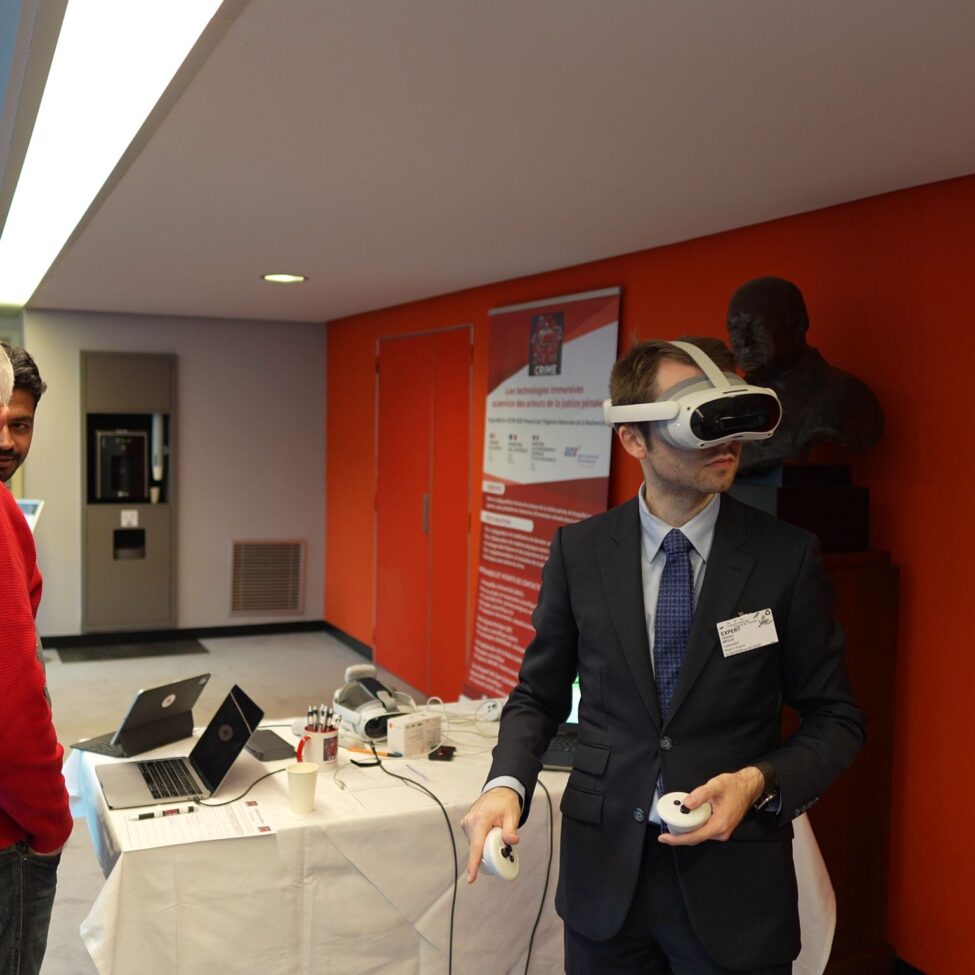 In partnership with the Robert Badinter Institute and the European Commission for the Efficiency of Justice (CEPEJ) of the Council of Europe, the Cyberjustice Laboratory presented the 3rd edition of the Cyberjustice Europe conference, held biannually in Strasbourg at the Palais de l'Europe. This year’s edition focused on the uses and challenges of virtual and augmented reality in the justice system.
Me Valentin Callipel, head of mission, represented the Lab and chaired the Young Researchers panel. This panel, made possible thanks to the support of the LexUM Chair on Legal Information, also featured Sébastien Meeùs, research assistant, who was selected to present his work on immersive uses of the courtroom.
4. JURIX — AIDA2J Workshop — Turin (Hybrid)
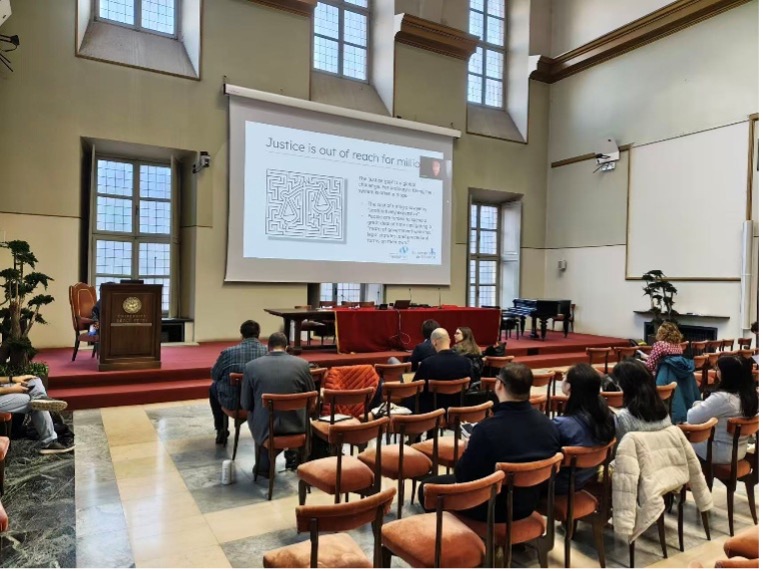 The AIDA2J workshop spotlighted innovations in AI for Access to Justice, Dispute Resolution, and Data Access, aiming to reduce barriers that keep everyday legal problems unresolved.
At this workshop, Tan presented LegalWebAgent: Empowering Access to Justice via LLM-Based Web Agents, a project co-authored by Tan and Professor Karim Benyekhlef.
LegalWebAgent investigates how multimodal, LLM-based web agents can help users navigate complex online legal information and service journeys, from understanding a request to interacting with web forms and procedural steps, aiming to reduce friction in real-world access-to-justice tasks.
We extend our thanks to the organizers for the opportunity to present our work and participate in these valuable discussions on AI and law!
This content has been updated on 04/28/2026 at 10 h 49 min.